Friday, January 6, 2023

Artist Interview!! Artist justine nguyễn-nguyễn in conversation with writer and artist Mary-Kim Arnold

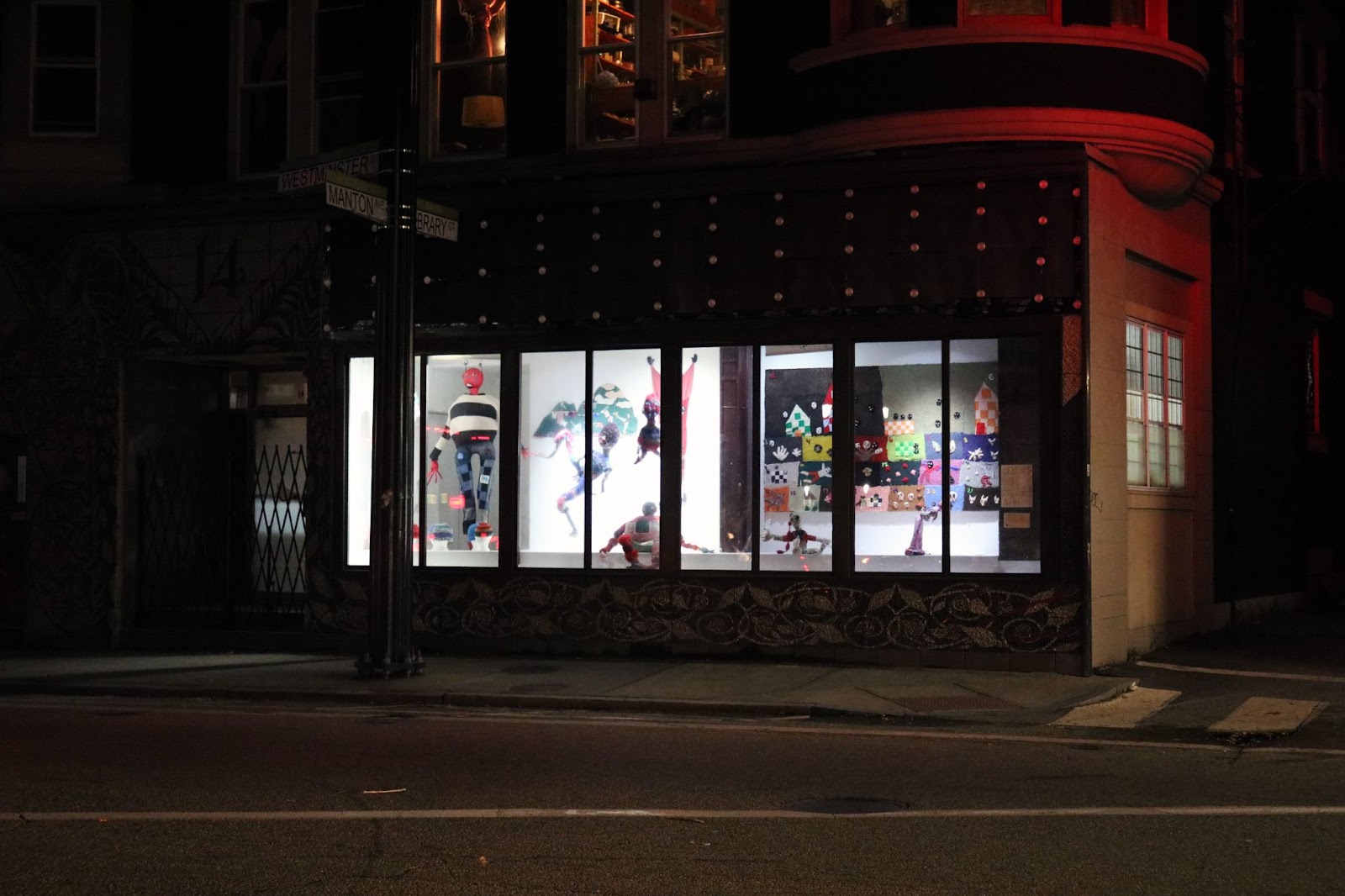
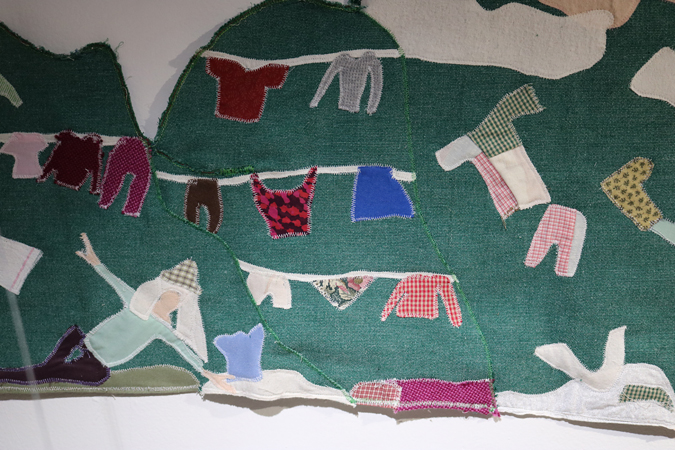
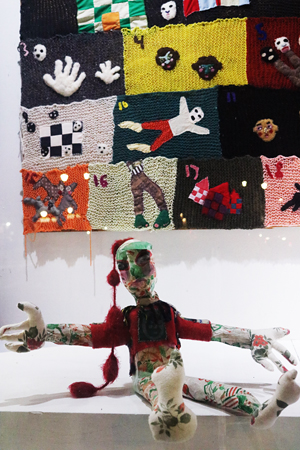
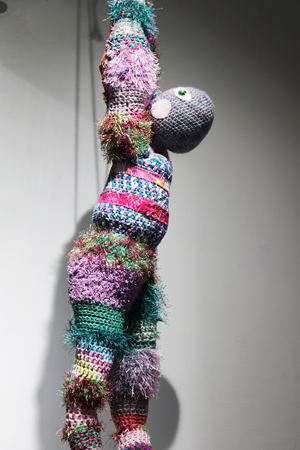
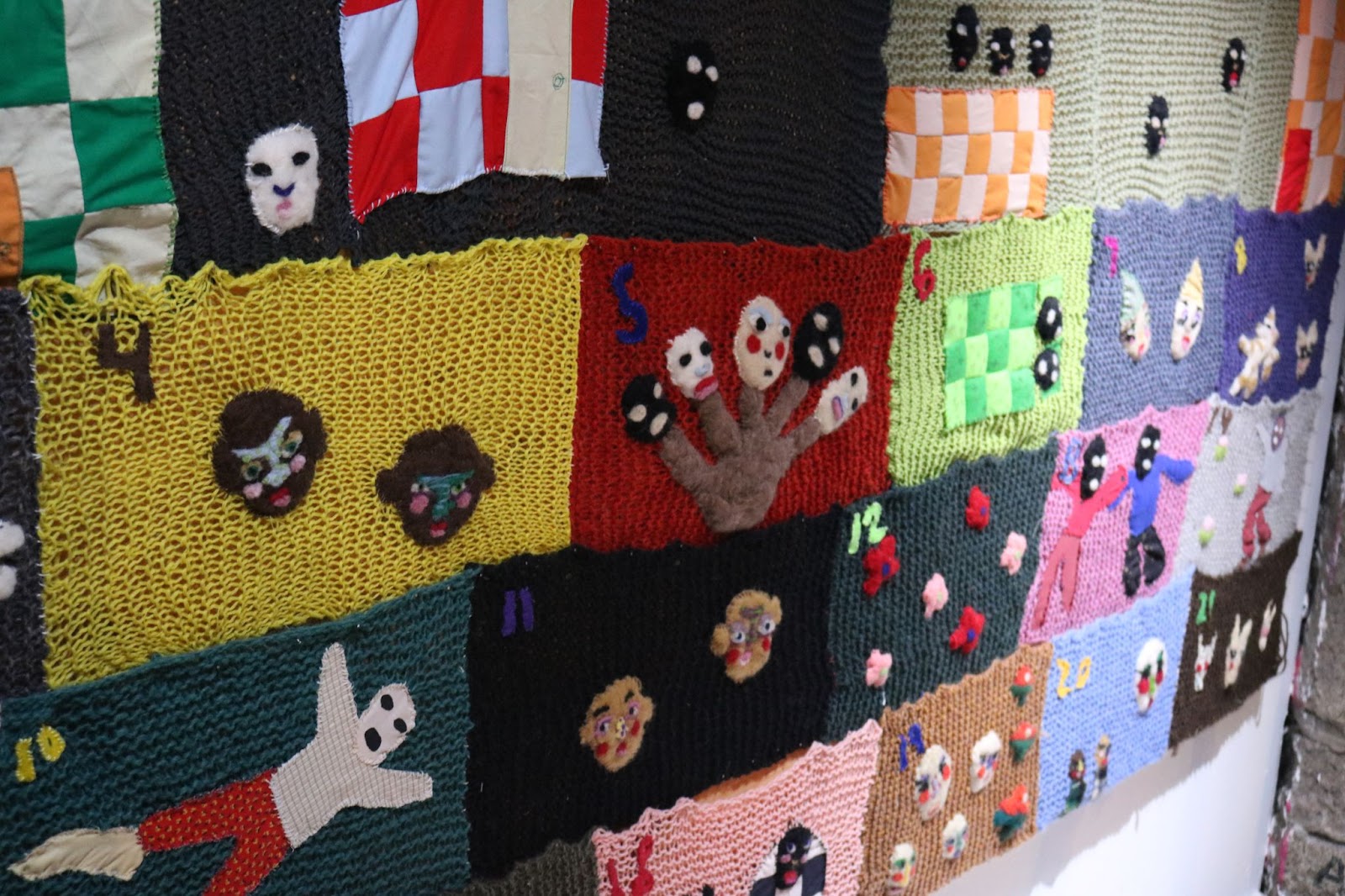
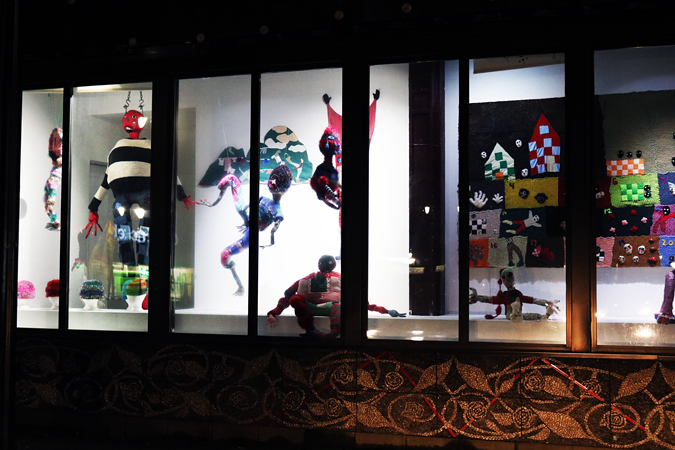
In 2023 we’re continuing our Storefront Window Installation Artist interviews where we pair our exhibiting artists with other artists and curators for interview conversations. This December - January we were pleased to host justine nguyễn-nguyễn’s installation.

justine hồng-giang nguyễn-nguyễn was born on a Monday morning; today, she is making, mending, and writing. Rooted in experience as a garment worker, her work converses with the cultural and corporeal histories of the hand-me-down. Her interstitial, associative practice resembles a form of nesting—she is a child of Vietnamese refugees, birdwatchers—restoring value to scrap material with a slow and sentimental hand. Alongside a textile repair service, nguyễn-nguyễn is working on an interlingual poetic manuscript, "second chants," which draws upon clumsy translation and reduplication to frame familiarity/foreignness and accumulation/erosion as binocularity rather than binary. 

https://www.jn-n.com

Below is a convo between justine and writer/artist Mary-Kim Arnold.

*******************************

MKA: justine, It’s been such a joy to see some of the range of your work — text, textiles, jewelry, image — and I was struck by how, and across all these forms, I observe a spareness, a delicacy, and an evocation of time. In Earring 23, for example, seeing the integration of discarded or broken materials, a crumpled metal leaf in this case, into such a delicate, expressive shape reminds me that these objects have had their own histories, their own pasts. And certainly, in your mending work, the often subtle but visible form your stitches take, call to mind the garment’s wear and its previous forms and iterations. Can you speak to how you think about time in relation to re-using or re-purposing existing materials in your work?
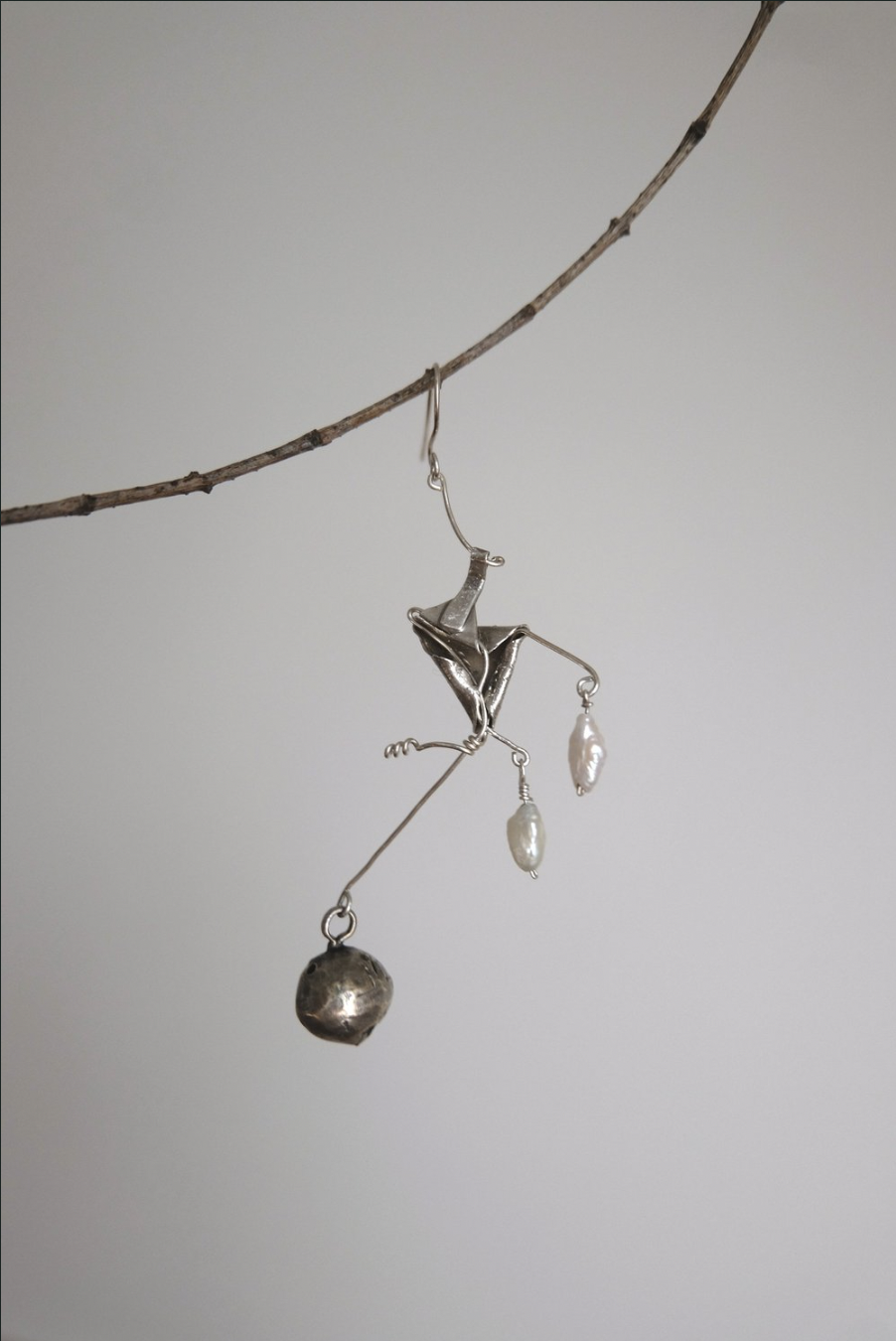
 

Earring 023, single earring, sterling silver with Biwa rice pearls, crumpled metal leaf, hollow Bedouin bell


jn-n: Thank you, Mary-Kim, for sifting through my work with such care.

As in a Vietnamese household, the bàn thờ is an important reference in my art and writing practices. I think of the altar in relation to Cecilia Vicuña’s precarios, sculptural installation activated by ritual. It enacts the retrospective gesture of honoring one’s ancestors—which could also extend to one’s creative influences—but to be honest, it’s also a convenient depot for ripening fruit. (I’ve been thinking about this idea of ripeness as a relative readiness, rather than a fixed point.) 

I started working with joss paper, which is typically burned as offerings to deities and the dead, in 2020. Apart from my aesthetic identification with it, I like the idea of creating with material that was never meant to last (at least in this realm), decentralizing my artistry/authorship within a more expansive timespace—this is also, in ecological terms, the core of sustainability. 


I am, admittedly, over sentimental, but I also consider repurposing material as a form of resistance. After leaving my last job, I tore apart the pants that had become my work uniform, incorporating the charcoal-stained linen into a textile piece (on view at Dirt Palace). It felt like a reclamation of the time I spent in that studio, a private renunciation of the kind of indentured servitude that fuels the clout economy of the art world. 
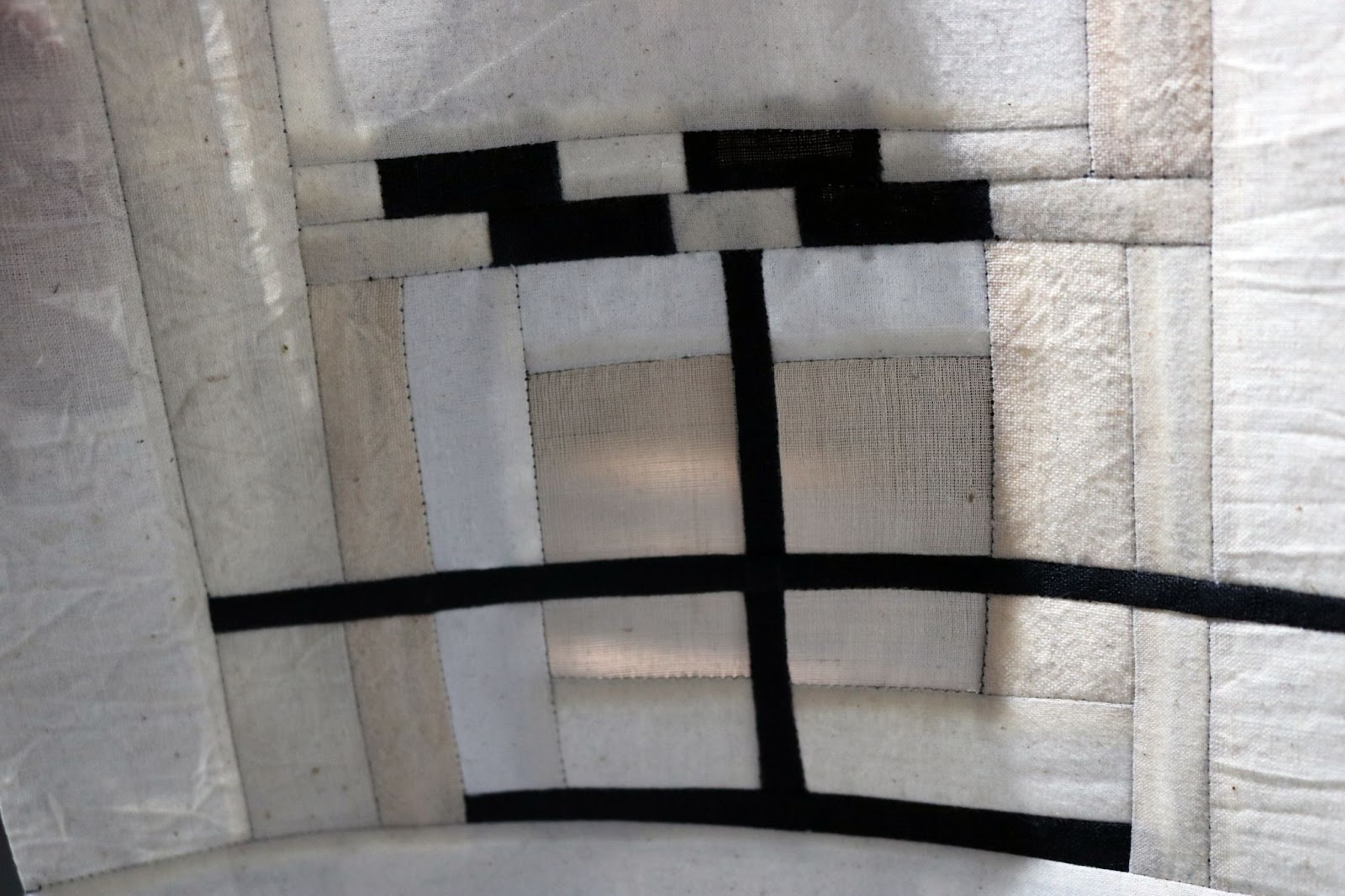

MKA: In your online journal, you refer to your “magpie” curiosity, which in one interpretation might suggest the collecting and gathering of shiny objects. You are talking about a collection of fishing lures in this case, and I’m wondering how you think about the things you gather and work with. Does an object (or set of objects) simply “speak” to you in some way, or do you tend to approach your materials more thematically or symbolically?

jn-n: My parents raised us in fear of wastefulness. So I think my foraging, born from a chronic sense of mottainai, is probably equal parts compulsion and curiosity. The urge to rescue heavily distressed clothing—what is called a “wounded bird” in the vintage vernacular—is comically strong, to the point where I’ll use “as is” and “for study”—disclaimers of damage—as search terms. These older garments are often constructed with material and craftsmanship of a quality that is rare these days, and I feel that I am not only restoring the functionality of the clothing, but also redirecting attention to this way of making. 
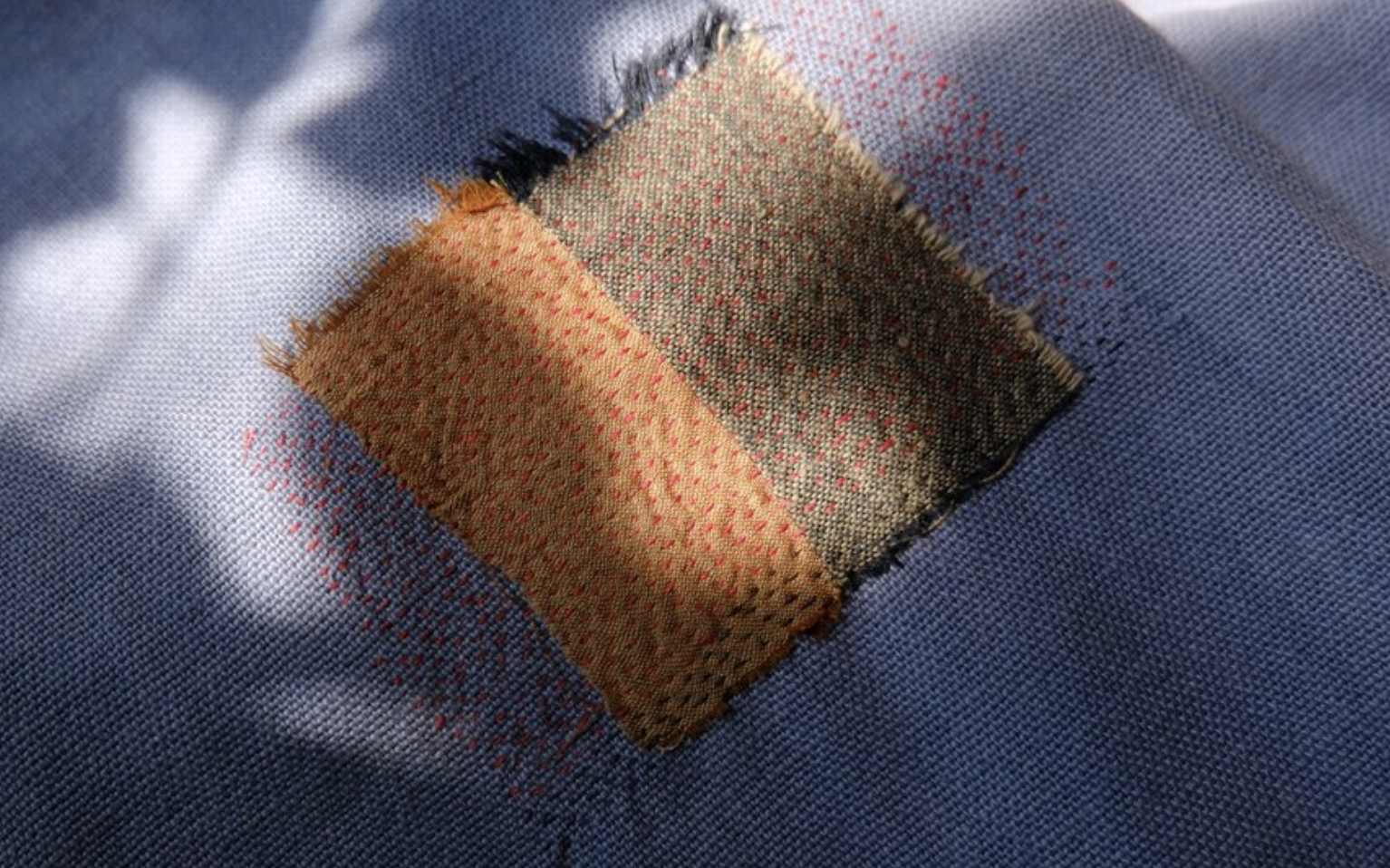


That being said, I am heavily guided by resonances, associations, and sentimentality, which often defy typical value systems applied to material, especially those based upon scarcity. 

Magpie curiosity also pulls me into these warrens of research, and whatever esoteric debris that gets lodged in my brain often resurfaces in my poems as symbols.


MKA: You have experience as a tailor and apparel designer, which of course, requires thinking about, and attending to the body of the wearer and their comfort as well as other needs. So, the idea of the wearer is ever-present, even when you are working on the garment itself they are not physically present with you. To me, there is something so evocative about this constant presence-absence, and I wonder whether that’s a tension that seems relevant or meaningful to you and your process in other types of work? 


jn-n: For sure. Because I’m so nostalgic by nature, memory is one such presence-absence that is foundational to my process, certainly with mending—the practice of responding to a tangible accumulation of memory that conversely, manifests as erosion. 

In perfumery, sillage (from the French for "wake”) refers to the scent trail which is left behind by the wearer. 

I take silences very seriously, as equal to words. Maybe because my reticence is often mistaken for blankness. Maybe because my background in garment-making has trained me to be hyperconscious of the interdependence between the interior and exterior. In composing a poem, I work with the interstitial negative space between words as a form of punctuation. Shaping these silences/spaces helps me suggest a pace for the reader. It also allows me to weave motifs into the warp and weft of my stanzas, using enjambment to form a kind of selvedge.


Form is emptiness, emptiness is form, a sock has at least one hole, etc. etc. 


MKA: In your Instagram feed, I noticed the juxtaposition of four images of hands. Although I’m guessing this may have been a fortuitous coincidence in the way the grid appeared at the time I saw it, it made me think about hand-work, mending being a prominent example of that. It seems there’s been a strong (popular?) desire for a return to the hand-made, the slow, careful work of stitching and making by hand. What are some of the pleasures of mending and hand-stitching, for you? 


jn-n: haha I’m glad you noticed the cairn of hands; I’m guilty of pruning my Instagram feed to compose such improbable balancing acts. 

The hand is my tool of preference—for sewing, but also rituals of eating (I’m especially fond of foods that reach for your hand, like those wrapped in leaves or clinging to bone) or self-pleasure, because of its haptic immediacy and intimacy. Machines often startle me. I recently attempted to use an electric toothbrush for the first time and ended up wielding it manually, forgoing the vibrating function. I never got accustomed to wearing a thimble, even, preferring the reciprocal puncturing of skin and fabric; my middle fingertip on my left hand is perpetually calloused. 

I take pleasure in the precision that hand-stitching invites. The pick-stitch, for example, involves picking up only a few threads of the fabric, sometimes on only one side, with minimal or no interruption of the outer face. In my series of talismans, I’ve developed a style of freehand embroidery that shifts between back-stitching and chain-stitching to manipulate the visual velocity of line, not unlike calligraphy. These two particular stitches reinforce the idea of time as cyclical—one has to loop backward in order to complete a forward intention. It is this pace that allows me to make marks with intuition, because I’m able to shift direction at any point along a line, a kind of slow-burning spontaneity. 


Simultaneously, I find complementary value in loosening the reins. The humble running (for me, a misnomer) stitch, which most closely aligns with the rhythm of the breath, often lulls me into a meditative state. The precision with which I engage neither privileges nor aspires to uniformity. It is, instead, a practice of sensitivity and an expression of care. As I once told a client: “Mending by hand is so time intensive and inefficient that it inevitably becomes a kind of gift. For me, it is an anticapitalist choice and, therefore, a restorative practice.”

Hand-craft also offers the satisfaction of self-sufficiency; instead of being anchored to the sewing machine—a posture ingrained with memories of undervalued labor—I can carry a seven square centimeter sewing kit (needles, pins, thread, the smallest scissors) upon my body, wherever it may be. It places my value within my self, rather than a context of production. 
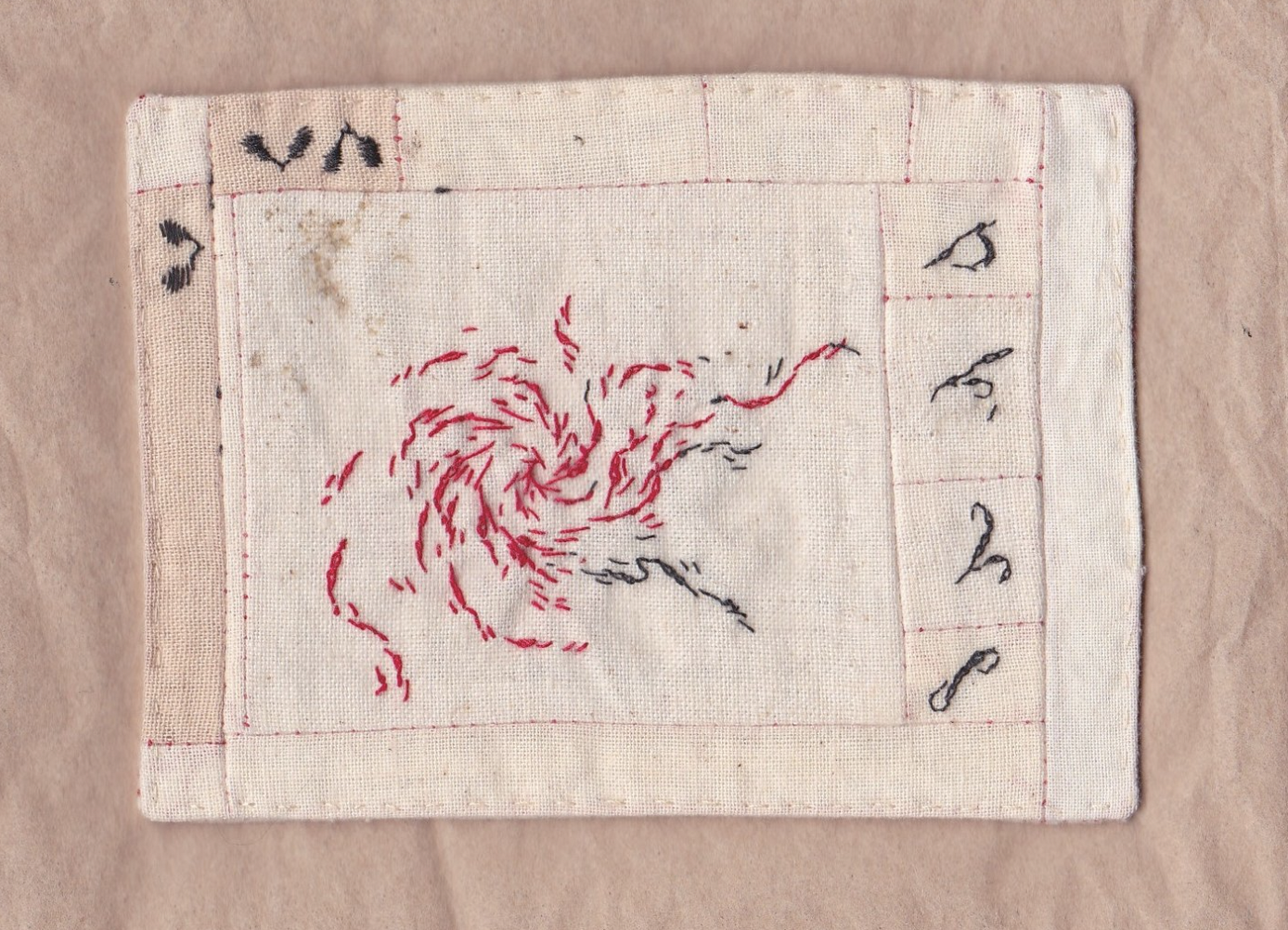

I used to work at an artist’s studio as part of a team creating large scale sculptural pieces on panels. An interesting paradox arose in the way the other assistants and I were instructed to periodically rotate, at once acknowledging the individuality of our hand, in the sense of penmanship and of labor, while seeking to erase it. 


MKA: In spending time with images of your work, I find myself thinking about layers — literal, in patching and mending, but also this layered idea of time — the previous (and future) wearers of the antique French trousers, for example — and of the feminist, futurist idea of “thick time,” a space where past, present, and future intersect as a way to think about belonging and collective action. I find this particularly compelling in thinking about displaced peoples, as an idea of diaspora. I wonder whether you think of this simultaneity (for the lack of a better term?) as informing your work? 


jn-n: My engagement with impermanence definitely stems from an intergenerational relationship with displacement (translation in the Euclidean sense). I come from a family of refugees. 

But I’m not really interested in escaping marginalization; I’m far more interested in drawing power into peripheral spaces—what I call “subterranean text”—subtitles, footnotes, appendices, parentheticals —which scaffolds and enriches our understanding.  The murmur of subterranean text disrupts a dominant linearity and univocality that is at best boring and at worst oppressive. 

MKA: You mention drawing on the idea of “clumsy translation” in your writing, which to my mind, is closely aligned with the tenets of hand-work, a kind of turning away from the (im)possibility of the “perfect” or transactional translation, to something less legible, messier, resisting binaries, perhaps (again) your magpie sensibility. Can you speak to what compels you to these approaches in your writing? Early influences or experiences with language to which you trace this relationship? 

jn-n: Vietnamese is sometimes considered a monosyllabic language, but it is actually dependent upon compounding monosyllables to create new words. Much of my poetic manuscript, second chants, revolves around reduplication, one of these morphological processes in which a word, or its stem, is repeated exactly or with a slight variation. Đỏ (red) is diluted through this kind of modified doubling, becoming đo đỏ (reddish), as if a carbon copy. 

Reduplication appeals to me because it finds meaning in slippage and skewing, and I've always felt a bit skewed, especially in the context of a neurotypical society. As a kid, I was sent to speech therapy—my elementary school teachers reported that my peers had difficulty understanding me—in which the therapist apparently detected a low self-esteem along with my misarticulation of the /r/. I can’t confirm if I suffered from low self-esteem as a child, but I do remember struggling to articulate mysterious bouts of sadness. I still struggle to articulate my emotions, even internally. Poetry often feels like a refuge from legibility—the Glissantian “right to opacity”—as much as it is a process of finding it. 

Rarely does a title make itself at home so early in my process; "second chants," however, has been an anchor. It references the bodily resonance of an ancestral tongue I cannot speak, as well as a renewed opportunity to grasp this foreign-familiar language by fumbling around in the dark rather than bật đèn. The double meaning—and doubling itself—is a cord/chord that runs through the project. I am invested in binocularity as an alternative to binary, in interpreting the world through relativity, refraction, convergence. 


My limited fluency in Vietnamese continues to be a source of insecurity, but I’ve also embraced entering the language through an aesthetic cat flap of sorts, sonic and visual, rather than the semantic. I pick up vocabulary in the same way I would a stray lá from the sidewalk, letting the function of words follow form. 

Because I am ignorant of how to properly string together phrases, I feel emboldened to mess around a little with syntax. In Vietnamese, there are set classifiers that chaperone nouns, which must be memorized; cuộn, for example, denotes nouns that are spooled, such as thread or a cassette. Lá, as a classifier,  indicates the leaf-like quality (size, thinness) of playing cards. Apart from shape and weight, classifiers can also impart a sense of animation, arrangement, or function. I’m interested in a poetic of engineered glitching, such as mismatching classifiers to shift the embedded context or characterization of a noun.* 

*In Apichatpong Weerasethakul’s film Memoria, Tilda Swinton’s character struggles to describe a recurring sound in her non-native Spanish: “a big ball/of concrete/falling into a metal well/surrounded by seawater.” Later, at dinner, she asks her nephew what he is drawing—“An orange?” It is a pomelo, something he has neither seen nor tasted before. The scenes aren’t explicitly related, but become resonant, by Vietnamese logic, via the classifier quả, which designates globular objects (fruit, the Earth). 

I analogize this nghiêng nghiêng textual approach to ikat, an Indonesian/Malay word applied broadly to the traditional textile technique known as atlas, kasuri, mudmee, and jaspe amongst various cultures, in which yarns are resist-dyed before being woven into cloth. As it is difficult to intentionally align the pre-dyed yarns on the loom, the approximate formation of patterns and motifs results in a characteristic blurriness. For me, these blurred images connote a relative velocity. I like to collect the frequent mishearings or misreadings that arise from my delays in processing, like the Barthesian punctum—“that accident which pricks me (but also bruises me, is poignant to me).”

In working with this kind of found material, I think of the practice of remixing, particularly the legacy of DJ Screw, who first developed the analog chopped and screwed technique by spinning two copies of the same record at a slight delay.** Splicing them with the crossfader, scratching to repeat phrases and double up beats, Screw then crucially slowed down the recorded (reduplicative) composite track, reducing its pitch, expanding time in a way that allowed the storytelling aspect of the music to sink in. 

**Reminiscent to me of dupioni, a plain weave silk with an irregular, slubbed surface, which is produced using thread from a pair of silkmoths who spin a cocoon together.


************************

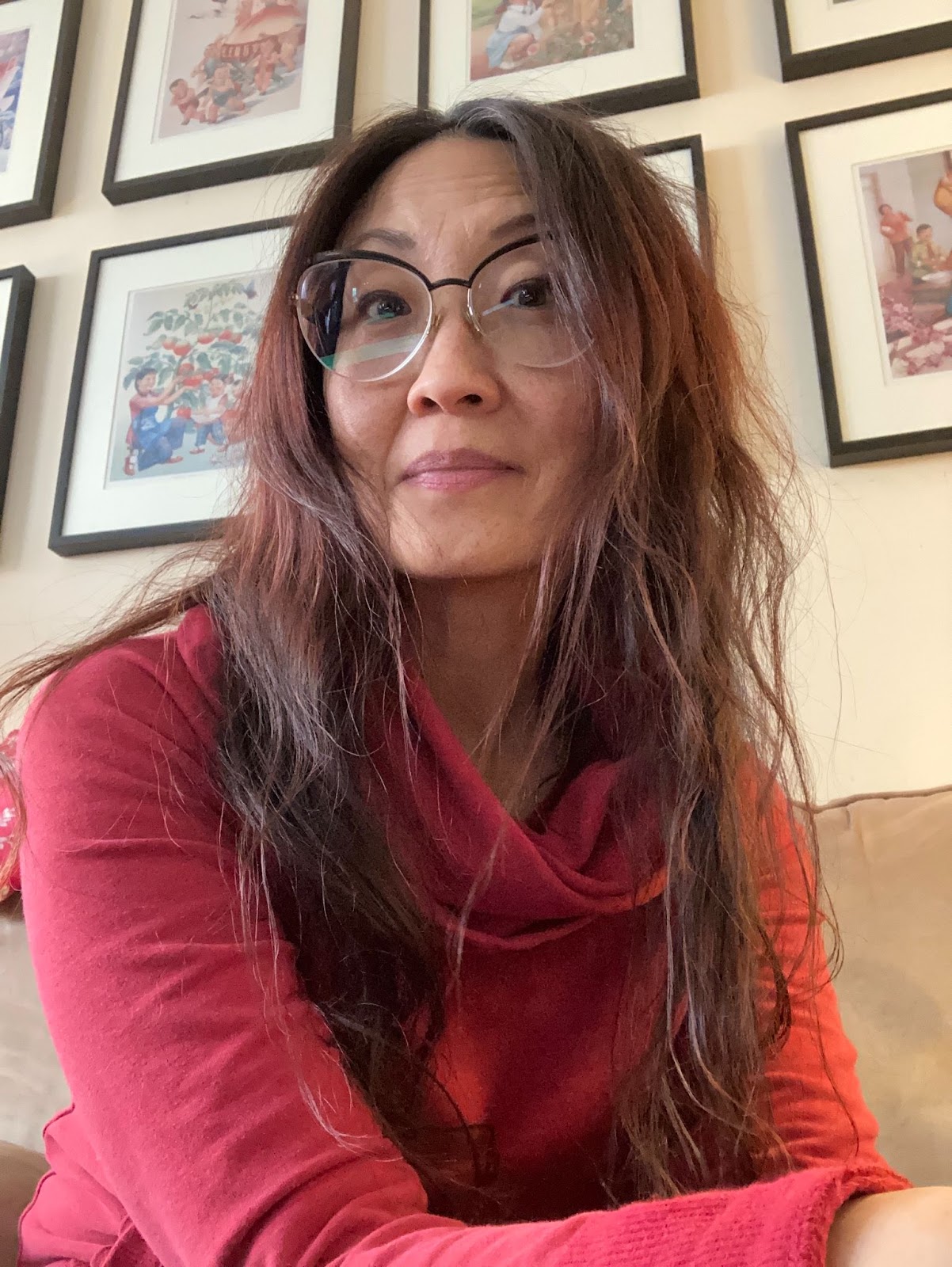
Mary-Kim Arnold is a writer, artist, and teacher. She is the author of The Fish & The Dove (Noemi Press) and Litany for the Long Moment (Essay Press). Other writings have appeared in Hyperallergic, Conjunctions, The Denver Quarterly, The Georgia Review, and elsewhere. Mary-Kim teaches in the Nonfiction Writing Program at Brown University.

Wednesday, November 16, 2022

Artist Interview! Celeste Diaz Falzone in conversation with Miranda Zhen-Yao Van-Boswell

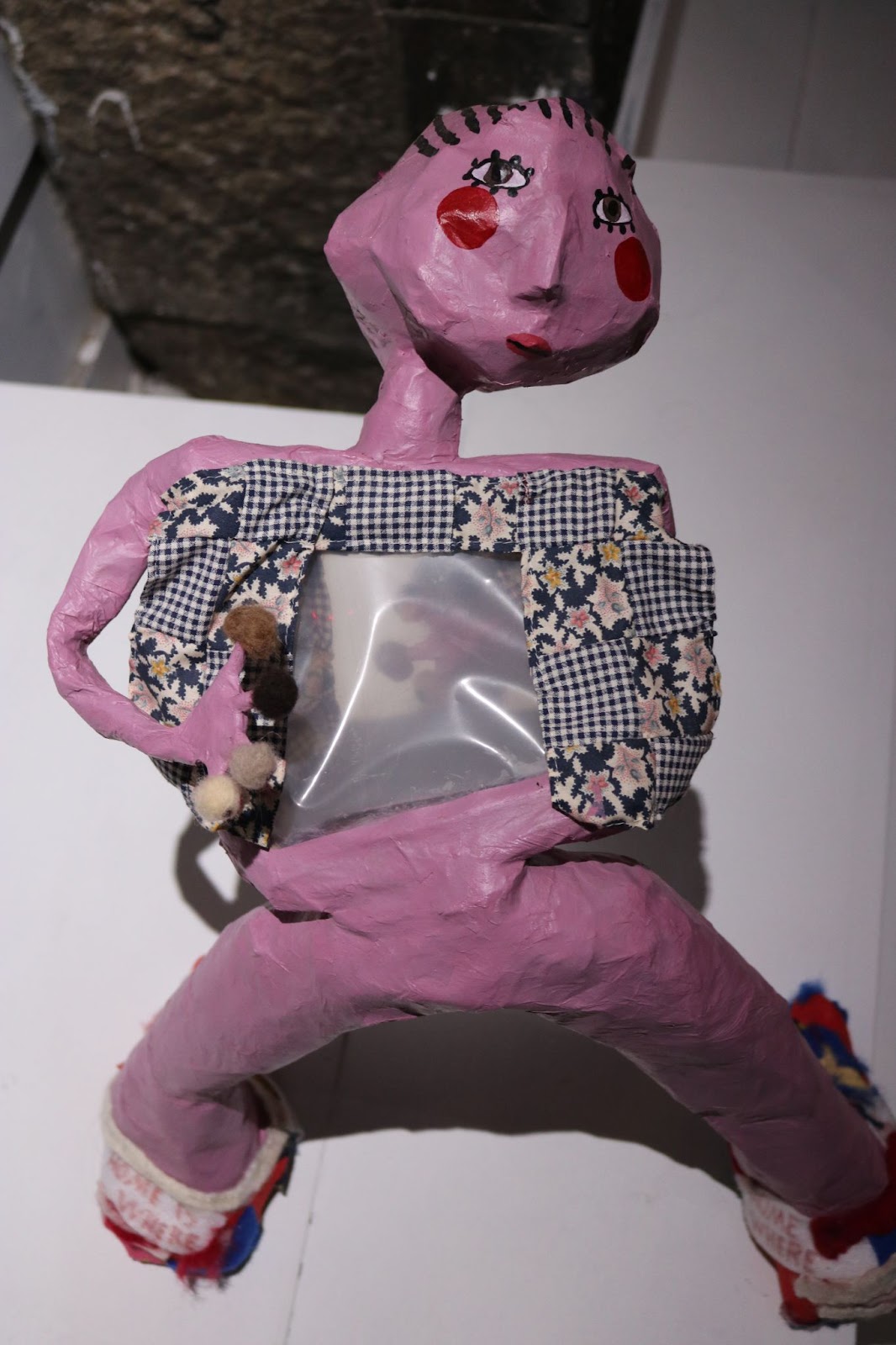
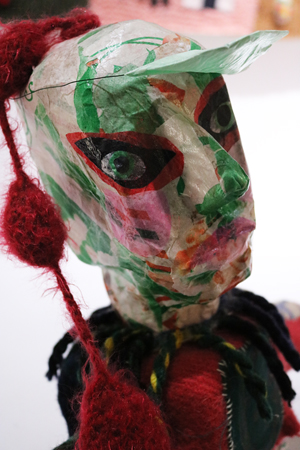
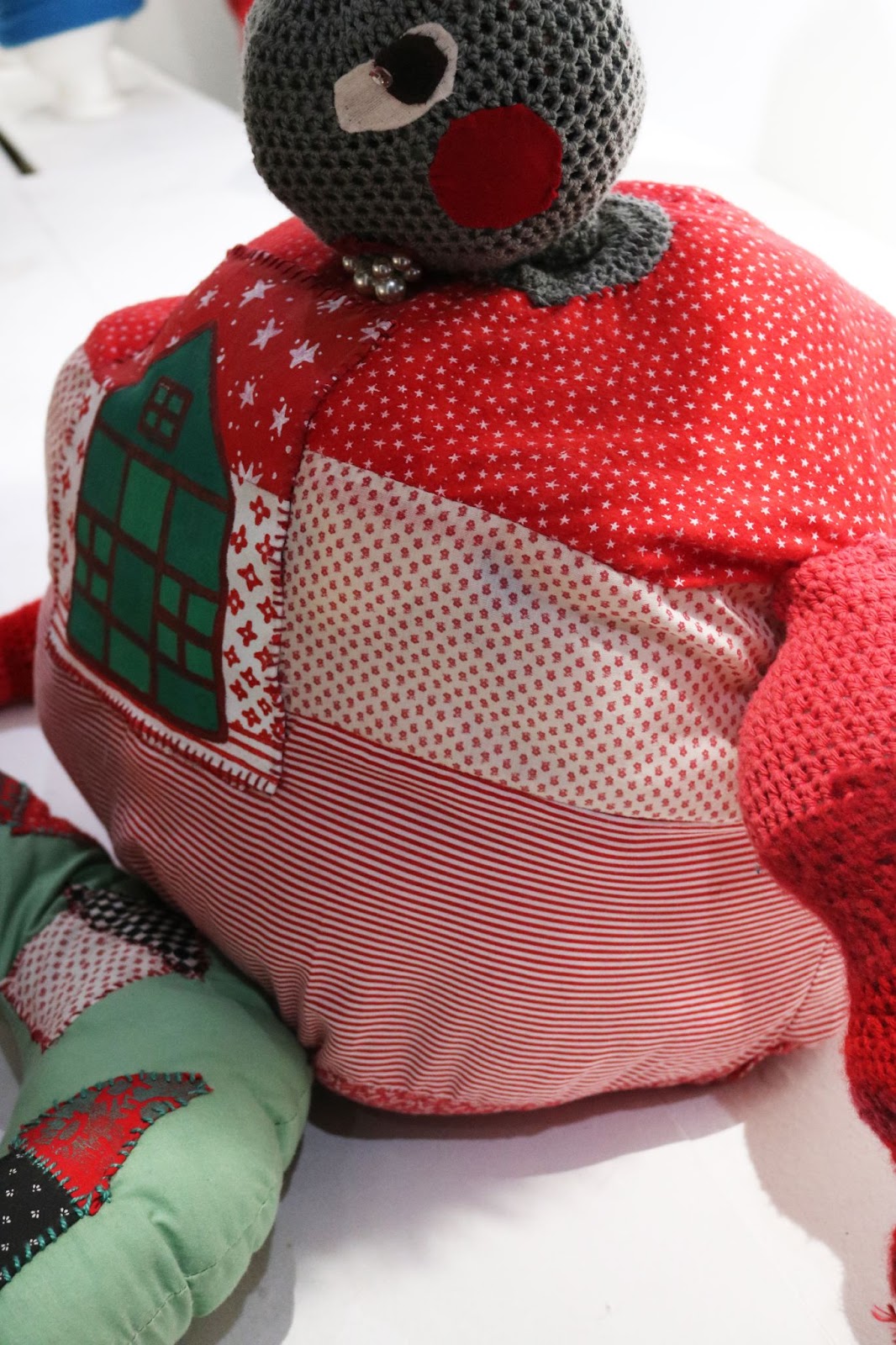
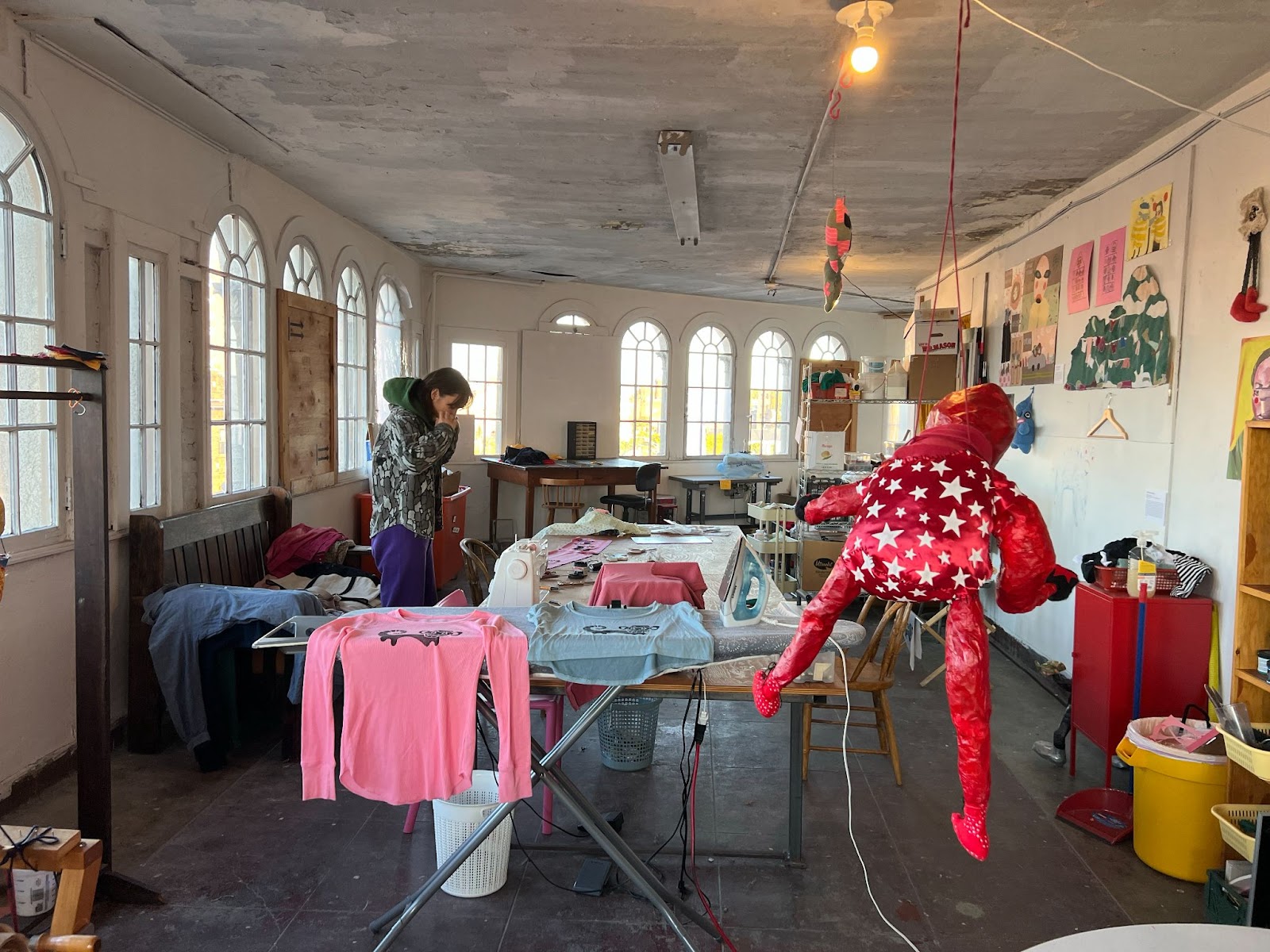
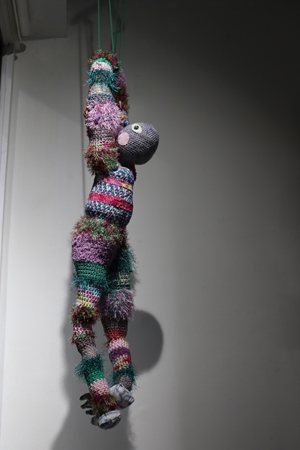
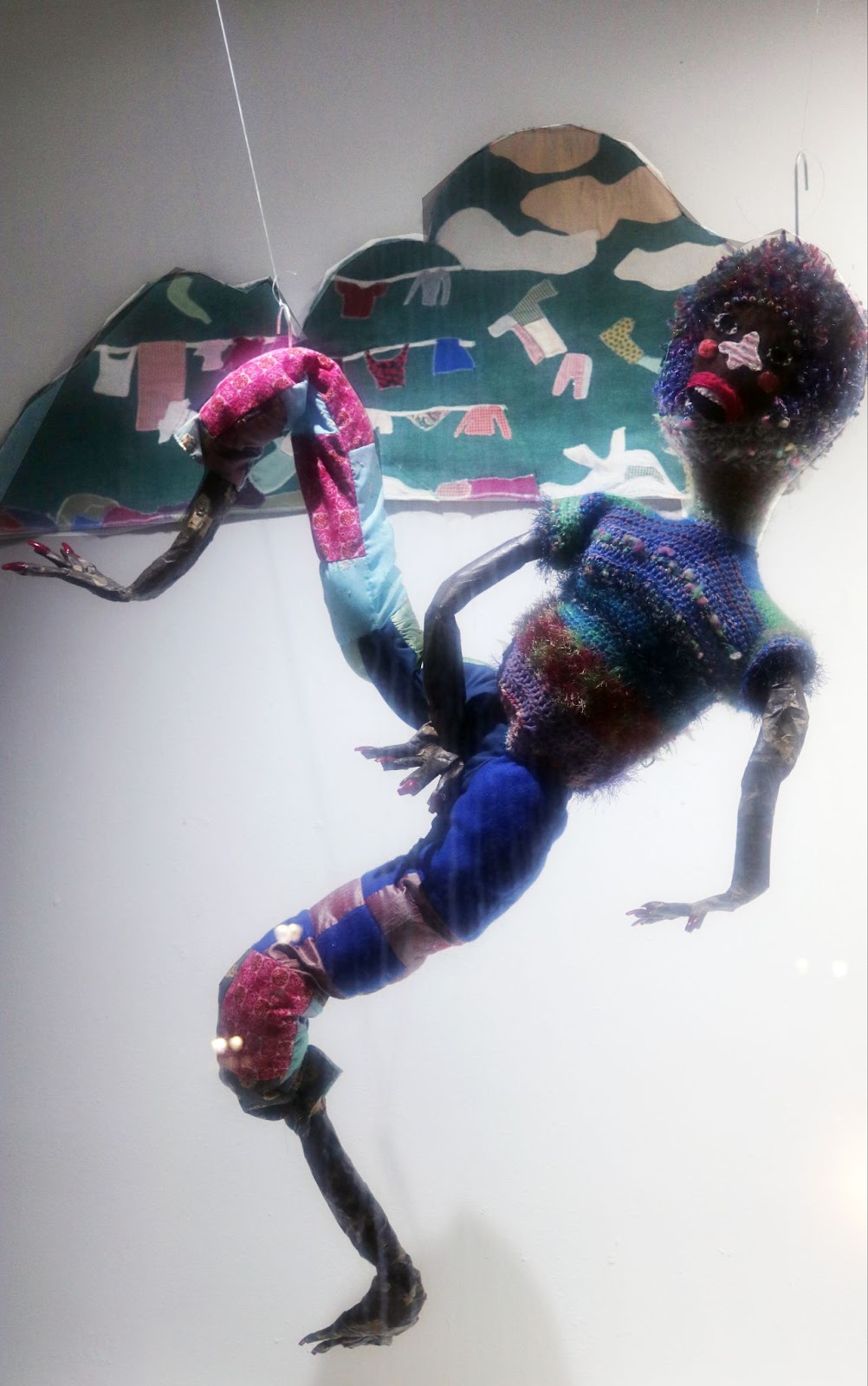
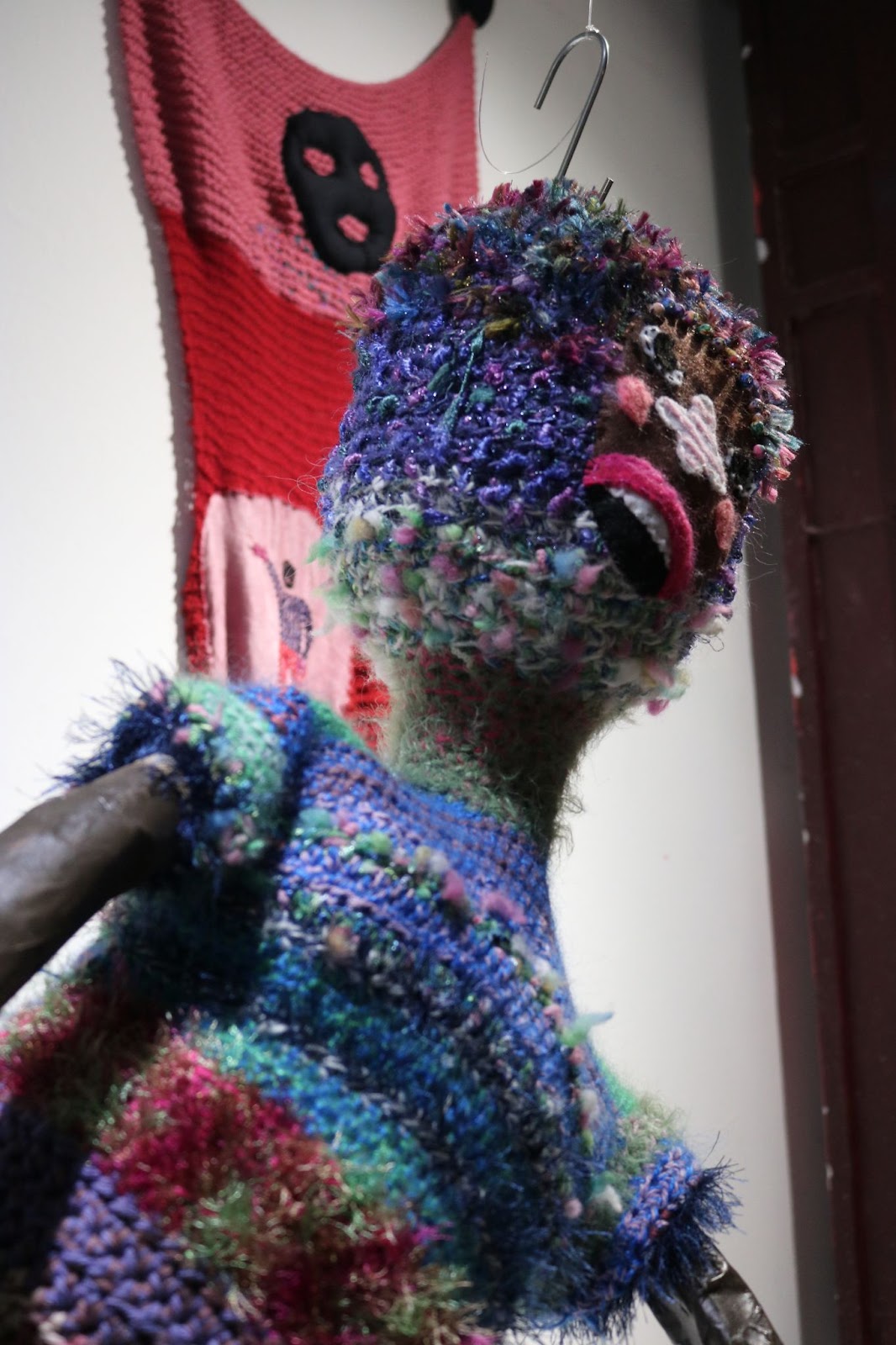
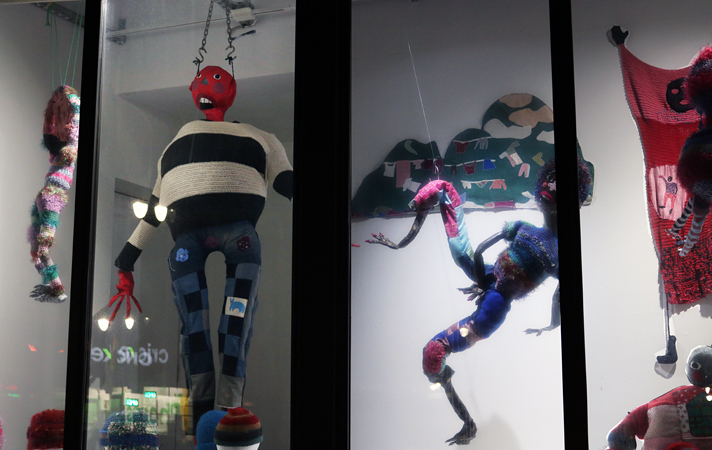
The only red light I look forward to is the one at the intersection of Broadway and Manton, because I get to check out the Dirt Palace window installation from my car. This month the window has been transformed into the new temporary home of Muscle Man, Binky, If I Were A Woman It Would Take All Day, American Dream, Security Camera of My LIfe, Home Is Where, and Golfer (sculptural ‘characters’ created by the Pawtucket based artist Celeste Diaz Falzone). I imagine them coming alive in the wee hours of the morning for a quick tea party before Olneyville Square busies for another day. Today I have the pleasure of speaking with Celeste at The Elk Lodge, an artist live and work space that they have been transforming with friends since 2020. 


Miranda Zhen-Yao Van-Boswell: What antics do you imagine your characters getting up to in the middle of the night? 


Celeste Diaz Falzone: Hmm. I imagine them not doing a full action, but more of a guiding movement that implies something bigger. I always wanted to write a book but never felt like I could follow through with it because all I was interested in were these subtle dramatic moments, and then I’d want to move on. In a lot of my drawings it looks like there’s a story, but it’s actually just a snippet-  the rest is up for interpretation. I think the characters are like that too, where it’s just a moment or expression or micro-something, but that thing is kind of undefined. 


MV: I walked down to the window this morning and was really struck by Home Is Where, and how it looks like it’s mid dynamic movement. It’s in this really unusual backbend- would you say that’s an example of what you’re describing?

CDF: Yeah definitely, it’s implied something is happening, but it might even be the moment before something has happened, like the thing before an expression. That movement in particular reminds me of dance a lot, which is something that’s very important to me. That fluidity of free movement that doesn’t necessarily mean anything in particular. It’s just kind of like a vomiting. 


MV: The Home Is Where piece was actually supposed to tie into a question I was gonna bring up more towards the end because it feels a bit heavier, but since it came up I might go for it now?


CDF: Go for it!

MV: Ok so it’s to do with home…I read that you don’t really feel like you come from one particular place or have a sense of belonging. I relate to that because of being mixed and moving around a lot, and just having really intense feelings about home. So that piece pulled on my heartstrings! Could you talk a bit about how that non-identification of being from somewhere works for you, and how that comes into play with your characters?


CDF: Yes definitely. I was born in Texas but grew up in Massachusetts with lots of moving around in between. At one point we were living in my dad’s office, a cramped space with boxes of items from our house reduced to what could fit. Even now, going to where my parents live -which is not where I grew up- every time I sleep there it’s a different mattress. There were never those consistent comforts of like, this is what my bed feels like. So there’s that very concrete realm of not having a foundation in terms of place or items. 


And yeah the mixed thing I can identify with too, cus in some ways I don’t identify with either of my parents’ backgrounds (my mom is Colombian and my dad is American) and in others I identify with both. And not knowing anyone else like me while growing up either. Or just not meeting a lot of people growing up full stop! I was homeschooled until I was 12 by my parents who are both somewhere on the spectrum. So in that way too I was very isolated. I know I was difficult to teach, too. Whenever my mom would try to get me to do a workbook I’d lock myself in the bathroom. So I didn’t have a solid home foundation or formal education. I mean, I learned how to read when I was 12…but I got way away from the question!


MV: No no, we’re super on track. It makes me see your work in more context which is awesome. I’m wondering if the soft bodiedness and doll-like nature of some of the characters are maybe a way of you trying to compensate for the grounded childhood you never had?


CDF: Definitely. When I was little I didn’t identify with other kids at all. And now it can be hard for me to see eye to eye with other adults, so I feel a little split in that way too. I feel like internally I’ve always been the same age. So yeah I definitely like to play with themes of age and childhood in my art, and just make things that I find comforting because I skipped a lot of those comforting things in early life. When I was little I slept with a hard plastic rhino that was like, spiky. I think now I’m trying to have more softness in my life.


MV: Softness is such a worthy pursuit! Before we dig more into your work, this might sound kind of random but I wanted to ask if you’ve seen the movie Patterson? That’s not the question, that’s the leading question to my question. 


CDF: I think I saw the trailer…is it about a bus driver?


MV: Yes! Adam Driver plays this bus driver poet, and Golshifteh Farahani plays his girlfriend, a homemaker who has a ton of creative energy and is always working on these quirky decor projects. Anyways, I think about this movie a lot because I know so many people have difficulty making art under capitalism, and are struggling to find ways of having sustainable creative practices, myself included. My impression is that being a full time artist is one of the hardest and rarest lifepaths. How do you do it, and has it ever been otherwise? 


CDF: Yeah, in a big way this space [The Elk Lodge] is what allows me to make art this intensely. Although I moved out recently and just have my studio here now, not having to worry about rent really opens up your time. Making clothes and doing caricatures are what sustain me now. Caricatures are nice because I get to practice my illustration and have a 5 minute interaction drawing somebody. I generally spend one day during the week making stuff to sell, and then I vend at the flea on the weekend. Besides that it’s pretty free format. 


MV: It’s true, not having to pay rent is huge. I’m glad you have a space like this to support your practice, even if it’s just where your studio is, that’s still significant. 


CDF: Yeah, I moved across the street a couple months ago to have some distance. I want to be spending my time making work that is expressive. And although I’ve had a lot of ideas for this space, like where to locate the restaurant and apartments, I’m not a builder, I’m an artist. I’m not interested in tiling, scraping off lead paint, or moving large buckets of water! And a lot of that type of work is what needs to be done here. 


When I moved out it felt ironic because we had just gotten heat and running water. I was asking myself why I was leaving when the place had finally become livable and comfortable. And I realized it’s because there’s still so far to go, and if I stay I’ll just keep expending energy on things that I see need to be worked on. Now I just come here to be in my studio, which is all I really want to do. Connor just became available and is really into building. So I think having Sam be able to do that stuff with somebody else and me just pitching in here and there has been so much better for me. It’s also nice to just have some separation because it’s tough living and working with a partner 24/7. It’s nice to be able to leave and rejoin. 


MV: Yeah when Xander first told me about this place she described it as what Providence was like in the 90s…And I think at the time there was no heat or hot water. But you just said running water. There was no running water?


CDF: Nope! But one of the storefronts downstairs does, so we were carrying it in buckets up to the third floor to then put in a water filter. We were taking our dishes down three flights of stairs for a year, washing them in a tiny hand sink and then bringing them all the way back up. 


MV: Wow. What a system! Congratulations on the dish sink! 


CDF: Thanks, yeah, it’s like a big update that we have a dish sink now!


MV: Let’s turn back to your work. There’s this quality of the magic of a child’s imaginative world, but it’s simultaneously sophisticated because it’s combined with your technical mastery of materials. How did you come to crocheting and knitting in the first place? And, are there any mediums you would never fuck with? 


CDF: I started knitting because of this middle school class called Girls Around The World. I haven’t really developed my knowledge beyond what we learned in that class actually, like I never got into the backwards upside down stitch or whatever. It’s so technical and that type of stuff never interested me much. Later in life I’m sure I’d love to learn one or two more things, but just to be able to make a flat surface I found so helpful, and I use that a lot. 


MV: But you’re doing really interesting curvy, circular stuff?


CDF: So that’s with the crochet. With crochet I’m able to make forms and do sculptural things, and that’s actually very straightforward too. It took me about a year to learn how to finesse shapes. My friend Michelle taught me, she’s super talented and has a very professional hand. And is really good at knots! 


MV: Ah, knots! Such a cool skill!


CDF: Yeah! So she showed me, and I started off making bags, and then I was like oh, I can make that into a head! And just kept rolling with it. Everything I make with crochet is pretty intuitive. I usually have a conceptual outline of an idea, and then filling it in is just a means to an end of expression. I’m not super interested in the technical stuff. 


As for mediums I would never fuck with, I don’t want to say never but for the most part things that require intense machinery I’m not super interested in, like woodworking or metal or glassblowing. I’m interested in things that are very accessible, like something that you could teach a person in a day. I like those types of very inviting things.


MV: It’s so weird to hear you say that what you’re doing isn’t technically advanced because it does not look that way. 


CDF: I mean, it’s taken a lot of practice but it’s really just slip knots on top of each other, and after a while you realize what makes it go out, what makes it go in. It’s like the easiest building block in terms of textiles that I’ve experienced. Once you get the motor skills down, you don’t need to know anything technical. 


MV: Easier than knitting? Sorry, I don't really know anything about fiber arts!


CDF: Knitting I think you need to know some type of mathematics to be able to go beyond the grid. With crocheting you’re just building knots, and can go in any direction you want. So you can make complex shapes without math or measurements. It’s like clay, you can just feel it and build it and there’s no technicality involved.


MV: You’re making it sound very appealing.


CDF: It is very appealing.


MV: In a past Wedding Cake House residency there was this really interesting conversation where the artist Chrissy Jones brought up the importance of there being a feeling driving one’s work. In her case it was to communicate awe, mystery, a sense of there being things you don’t understand and that are much bigger than you. Horror and being a conduit for the paranormal are major threads running through her work. If it’s possible to sum up, what would you say are some of the emotions at the root of yours?


CDF: There’s definitely a lot of sadness and a lot of humor.  I think those are the two main emotions that I have. Being able to laugh is how I cope with loneliness. I’m trying to have more variation in my relationships now, like I don’t have to only be funny, which is kind of my defense mechanism. A lot of the expressions that I make in my sculptures and drawings are ambiguous, which is a reflection of me having difficulty decoding what people are feeling. Most of the time I really have no idea -that’s why being able to laugh feels so comforting. 


A lot of the time I don’t really feel a kinship to humanity, I just feel really observant of it. I can be hard to be around. I had been going to Mass Art for one year and wasn’t really enjoying it. I told myself I needed to work on being social, because I always felt lonely but put no effort into making friends. So I asked this girl if she wanted to go to Goodwill with me. It was a 20 minute walk but she insisted on waiting for a bus that was 15 minutes away. And I was like, I’m gonna kill myself. I just have no patience cus I’m always on my own wave, never having to accommodate anyone else. So yeah, I’m hard to move with. I’ve always had to be my own friend, my own mentor, my own biggest fan. And in that trying to be everything for myself all the time, it’s now made it hard for me to intermingle with others. It’s also given me a lot of strength, but at the expense of connection I guess.


MV: Where are you at with that now? Are you at peace with the way you are in relations with others? 


CDF: No, I feel like it’s a constant struggle, but I’m definitely getting better. I think it turns people off that there’s no cascading on or off. I have no rhythm. It’s just like yes/no, very matter of fact. That works for me and that works for the people that are close to me in my life, but it’s taken a lot of time. I think the biggest part of socializing for me right now is just self acceptance. 


MV: Well, I know this is a very particular format we’re in right now but I think you’re great to hang out with!

CDF: Thank you!


MV: I can’t help noticing the genderlessness of your characters, and also how as creatures they feel beyond human. Do you ever think of them as being from a time long ago, or a time yet to come? 


CDF: I think the genderlessness is something very familiar to me. There are definitely things about masculinity and femininity that really intrigue me, but that I also really don’t understand. And that kind of inbetweenness is something I identify with a lot when talking about gender. 


In terms of time, if anything I’d say they’re both current and timeless. They’re exaggerated expressions of energy that already exist. I think about them as being just a more honest representation of people I know and see, fragments of human behavior and expression. Some are definitely inspired by things that I’m dealing with. But none of them are direct self portraits per se. 


*************************************************************


Miranda Zhen-Yao Van-Boswell is an artist of the Hong Kong diaspora, currently living in the ancestral homelands of the Narragansett Nation (colonially known as Providence, Rhode Island). Coincidentally born the same year as the Hong Kong handover from Britain to China (1997), Miranda is making one cyanotype a day for the next 25 years in anticipation of a nationhood death certificate issued July 1st 2047.


Miranda graduated from Brown University in 2020 with a BA in Visual Arts and works in photography, text, and mixed media. She’s interested in the triangular affair of translation, rituals of domesticity, and the intersection of personal and collective histories. Miranda is a Rhode Island State Council of the Arts (RISCA) grant recipient, and has work held in the Museum of Everyday Life’s permanent collection. She is the Work Exchange Artist in Residence at The Wedding Cake House.


www.mzyvb.com

@m.zhenyao.vb


Monday, October 17, 2022

Must Be The Season Of The Skeleton


DIRT PALACE NEWS!

OCTOBER 2022


Artist in Residence/ Live/Work studio slot opening at Dirt Palace Classic

January 1st!!!
Residency is for a 1 year term
For more info on what the opportunity entails
Click HERE
To learn more about how to apply

Click HERE


WCH RESIDENTS NEMESISTER RETURN! 
COMING WITH THEM ARE W. MASS FRIENDS PUSSYVISION AND
THE TAXIDERMISTS
W/ LOCAL SUPPORT FROM ANKA RECZYNSKA AND DP CLASSIC RESIDENT LN CELESTINE

OCTOBER 7TH | 8 PM | 7-15$
MASKED & VAXXED EVENT


INTERLACE GRANT APPLICATIONS ARE NOW OPEN!!!!!!!


Project Grants due October 11th - Interlace Project Grants range from $4000 to $6000 and support artist-driven visual arts projects in the Providence area. 

Emergency Grants due on the 7th of Every Month. Emergency Grants intend to mitigate the harmful effects of emergency situations and crises. Open to all self identifying Providence area visual artists..


WINDOW

SEPTEMBER - OCTOBER WINDOW ARTISTS VUTHY LAY & VICTORIA XU
After Spirit: Channara Tom “Philly” Pheap

After Spirit: Channara Tom “Philly” Pheap, is an altar composed of offerings accumulated from family, friends, and community members over the course of 1,111 days. A place created for his loved ones to reclaim Channara’s memory after he was murdered by the Knoxville Police Department. The installation in the Storefront Window Gallery features a series of interviews, framed photographs and public shrines that invites others who have lost their own to state violence to also share with the public and learn about his story. 


On September 19th there was a community discussion/artist talk with Vuthy Lay (co director & handy person), Victoria Xu (co director & filmmaker), Sophea Pheap (Channara’s sister and art director), Lydia Pheap (Channara’s nibbling and art director), Patcharee Phomsouvannady (collaborator). This discussion was facilitated by Vatic Kuumba. A recording of the discussion can be seen here: https://www.instagram.com/p/CitUoT0or8a/?hl=en

More info: @for.channara / @vixixu / @khmerican.myth.maker

Facebook page: https://m.facebook.com/for.channara 

Instagram: https://instagram.com/for.channara?igshid=NmNmNjAwNzg=

Website: https://for-channara-philly.org/ 

The front window installation will be up for a few days longer at least through October 7th. We highly urge you to come down, check it out and spend some time with it!


Storefront Window Gallery Projects are made possible in part through support from the City of Providence Arts Culture Tourism Department


UPDATES ************

FROM THE PEOPLE OF THE PALACE!! 


NATASHA BRENNAN

hi everyone! happy fall!! the air is chillier and I've been drawing and printing and teaching and making endless pumpkin spice lattes at work and I wouldn't have it any other way. Here's a few little things I've been working on and a reminder that I'll be tabling at MICE (Massachusetts Independent Comics Expo) in Boston on October 22 and 23. please stop by if you're around!


ELLEN (LN) FOSTER

Skeleton season is one of my favorite seasons, and we have two great shows coming up [see Kai’s update for 10/22 info, a show not to miss!]

This Friday (10/7) we’re hosting Nemesister, PussyVision, and the Taxidermists from out of town, and I'm excited to be playing as local support as a duo with the talented Anka Raczynska (FKA EAR). Please come out to support the touring acts and for my first time playing out at Dirt Palace -- see some magic transpire.

This past month, my creative focus has mainly been on setting up and helping with the upcoming event. Otherwise, I’ve been reading Dhalgren, rambling around, attempting to peep some leaves and wrapping up teaching at Drexel. Looking forward to hunkering down for the winter and digging into some recording, collaging, letter-pressing, and more woodworking. I didn’t get to it this past winter, but maybe this time I *will* build a boat out of one sheet of plywood. Or just out of a pile of trash.


KAI VAN VLACK 

This is a double show month at the Dirt Palace and while I won’t be performing I’m really excited to have curated a showcase of what I think are some of the best bands in the Northeast:


Reading/Listening/Watching

Beatrix Urkowitz - The Lover of Everyone in the World

Stories about two people who are profoundly available to the people around them, albeit in almost opposite ways, and the consequences of being known. Somehow both deeply personal and universal (or is that just me?).

Cloud Rat - Threshold

Avenging grindcore angels. After a decade this band still feels new to me. Madison vivisects herself while the band plays a tune to match.

Brain Worm’s Nightmare

Lars, of Silver Dagger and Dirt Devil, is showing her work at the occasional Peter Fuller cafe every Saturday and Sunday in October from 8pm to 2 pm. I missed the opening but will be there this Saturday to check out her gorgeous marbling and sculptures. Say hi if you see me <3


YSANEL TORRES

YSANEL + her pup Nike were visited by Kate McNamara this month at Dirt Palace<3


JOSEPHINE DEVANBU 

"Skeleton" Ivory Soap, 2022


XANDER MARRO 

On a quest to build a shitty shed & other stories of summers end. 


PIPPI ZORNOZA

Photo by Julz @r4cc00nluvr

WOW HARPY tour was such a blast…. A really amazing experience!! It was incredibly special to see so many old friends and we were treated so well on the road. So thankful!!!

HARPY Tour Tapes and Shirts are now available on our band camp

HERE


******************************
LIBRARY HI-LITES!

MONTHLY PICTORIAL TREAT FROM THE DUSTY SHELVES OF THE DIRT PALACE

FURTHERING THE QUEST TO SPREAD FUN LIKE GIN AND JUICE, MOSTLY GIN


Complications by Zachary Rossman


BULLETIN BOARD******

PARTY AT RIVERSIDE PARK! 
Woot!


venus in blue jeans//venus in furs/// forward to a friend
Copyright © 2022 dirtpalace, All rights reserved.